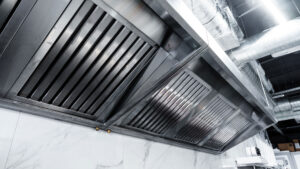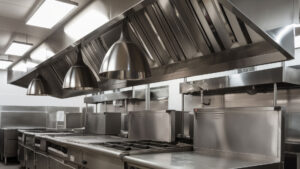
Residential kitchen hood cleaning removes the grease, smoke residue, and airborne cooking byproducts that build up inside your range hood every time you cook. Left alone, that buildup blocks airflow, feeds indoor air pollution, and turns your hood into a genuine fire hazard above your stove. A clean hood works the way it was designed to: pulling heat, smoke, and grease out of your kitchen instead of just moving them around.
What Residential Kitchen Hood Cleaning Actually Removes
Every time you sear a steak, fry an egg, or roast vegetables at high heat, grease particles become airborne and travel straight up into your hood. The visible filter catches some of it. The rest settles inside the plenum (the chamber behind the filter), coats the fan blades, and cakes onto the motor housing. None of that is visible when you glance up at your hood, which is exactly why homeowners underestimate how much is actually in there.
The Fire Risk Hiding Above Your Stove
Cooking remains the leading cause of home fires in the United States. The National Fire Protection Association attributes roughly half of all reported home fires to cooking activity (verify current published figure before publishing; NFPA updates this dataset yearly). Most of those fires start on the stovetop, but a hood coated in old grease gives a stovetop flare-up somewhere to travel. Grease is fuel. A clean hood contains a small kitchen fire. A greasy one can help it spread.
Why Phoenix-Area Kitchens Build Up Grease Faster
If you cook in the Valley, your hood works harder than one in a humid climate. Arizona’s low humidity causes grease to dry and harden on interior surfaces faster than it would somewhere with more moisture in the air, so it bonds to the plenum and fan blades instead of staying soft and easy to wipe away. Add in dust from monsoon storms drawn in through the exhaust path, and a hood that “looks fine” from below can be carrying more buildup than the same hood would in a coastal city.
Signs Your Range Hood Needs Cleaning Now
- Visible grease pooling on the underside of the filter or baffles
- Weaker suction, with smoke lingering in the kitchen longer than it used to
- A greasy film on nearby cabinets or the wall behind your range
- A burnt or stale cooking smell that shows up even when nothing is on the stove
- Rattling, humming, or a fan that sounds like it is working harder than normal
DIY Filter Cleaning vs. a Full Professional Cleaning
You can handle some of this yourself. Removable mesh or baffle filters can be soaked in hot water with degreaser and scrubbed by hand every few weeks if you cook often. What you cannot do safely, or thoroughly, is get inside the plenum, clean the fan blades and motor housing, or disassemble a luxury hood system without risking the internal components. That is the part a professional cleaning is built for.
How Often Should You Clean a Residential Hood?
If you cook daily, especially with oil, plan on more frequent cleaning. Households that fry or grill often should schedule a professional cleaning at least once or twice a year, with filter washing in between. Lighter cooking, mostly boiling, baking, or reheating, can typically stretch to an annual cleaning. When in doubt, the signs above are a more reliable guide than the calendar.
What a Professional Residential Cleaning Includes
Hood Hero’s certified technicians are trained on the manufacturer specifications for major luxury brands including Wolf, Viking, Sub-Zero, Thermador, GE Monogram, and Miele, so the hood comes apart and goes back together the right way. A full residential cleaning covers the filters, the interior of the hood, the fan and motor area, and a performance test before the technician leaves, plus an exterior polish so it looks as good as it works. See the full Residential Hood Cleaning service page for what is included.
Frequently Asked Questions
How often should I clean my residential range hood?
Households that cook daily or fry often should schedule a professional cleaning once or twice a year and wash removable filters every few weeks. Lighter cooking households can typically go a full year between professional cleanings.
Can I clean my range hood myself, or do I need a professional?
You can wash removable filters yourself with hot water and degreaser. The plenum, fan blades, and motor housing need a professional, especially on luxury brands where incorrect disassembly can affect performance or void a warranty.
What are the signs my kitchen hood needs cleaning?
Visible grease on the filter or baffles, weaker suction, lingering smoke or odor, a greasy film on nearby cabinets, and unusual fan noise are all signs it is overdue.
What’s the difference between cleaning the filter and a full professional cleaning?
Filter cleaning removes surface grease from the removable part you can see. A full cleaning also degreases the plenum, fan blades, and motor housing, the parts that quietly collect the most buildup over time.
Does a dirty range hood actually increase my home’s fire risk?
Yes. Cooking is the leading cause of home fires, and a grease-coated hood gives a stovetop flare-up fuel and a path to travel instead of stopping it where it starts.
Your Hood Works Every Time You Cook. Make Sure It’s Ready.
A range hood only protects your kitchen if it is clean enough to do its job. If it has been longer than a year, or you are seeing any of the signs above, it is worth having it looked at before it becomes a bigger problem than a cleaning.
Ready to schedule? Request your free estimate and a Hood Hero technician will follow up.