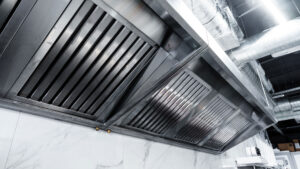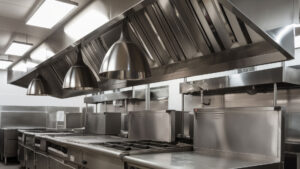
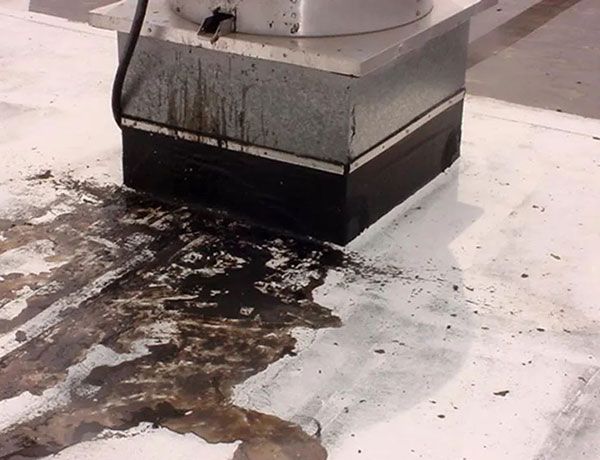
Grease buildup invites pests because it is food, and it collects in the places pests like to live: behind filters, inside the hood plenum, along the duct and around the rooftop exhaust fan. Cockroaches are drawn to grease near warm cooking equipment, and grease that escapes onto the roof puts food where rodents, birds and insects travel.
Under the 2017 FDA Food Code that Maricopa County enforces, that can turn into two findings instead of one. The premises must be kept free of pests, with harborage eliminated, and exhaust ducts must be cleaned so they are not a source of contamination. Pest control handles the first. Only professional hood and exhaust cleaning handles the second.
The Short Answer: Where Grease Feeds Pests
- Hood surfaces and filters: the grease closest to the line, within easy reach of cockroaches sheltering around warm equipment.
- The plenum and duct: grease daily cleaning never touches, and a Food Code finding in its own right before any pest finds it.
- The rooftop exhaust fan: grease that has left the system, on the one part of the building nobody on your team sees.
- Drains and grease traps: where grease washed off the line ends up and where flies breed.
Why Grease Works So Well for Pests
Pests are one of several hazards of grease in a Phoenix kitchen, and the reason is simple. Entomologists at the University of Florida describe a “survival triangle” of food, water and harborage, and eliminating it is the core of commercial kitchen pest control. A kitchen supplies all three within a few feet of the cook line. Grease overhead and behind panels is the food side that daily cleaning does not reach.
Cockroaches
Penn State Extension describes German cockroaches as “especially fond of starches, sweets, grease, and meat products,” and notes they prefer warm, moist places near stoves, dishwashers and sinks. The University of Florida’s guidance for commercial kitchens tells inspectors to focus on equipment where heat is generated. A greasy hood over hot equipment is food and shelter in the same place.
Rodents, including Phoenix roof rats
The University of Arizona Cooperative Extension reports that roof rats were documented in Phoenix in 2001 and describes them as agile climbers that travel along wires, rafters and rooftops. Maricopa County notes they are most active from November through May. That research is not about restaurants specifically. But grease pooled around a rooftop exhaust fan is food sitting on the exact route roof rats use.
Flies
Texas A&M AgriLife Extension notes that house flies breed in decaying organic matter such as garbage, and drain flies develop in the thin films that build up inside drains. Grease washed into floor drains belongs to the same problem as the hood above them, which is why grease traps pumped on schedule matter to pest control as well as plumbing.
What the Health Code Says
Maricopa County Environmental Services inspects food establishments under the 2017 FDA Food Code, adopted with “no future editions or amendments” in the county health code revised August 19, 2026. Four sections do most of the work on this topic:
- 6-501.111, Controlling pests: the premises “shall be maintained free of insects, rodents, and other pests,” through routine inspection of deliveries and the premises, approved control methods when pests are found, and “eliminating harborage conditions.”
- 6-501.14, Cleaning ventilation systems: intake and exhaust air ducts “shall be cleaned and filters changed so they are not a source of contamination by dust, dirt, and other materials,” and exhaust vented outside may not create a public health hazard or nuisance.
- 4-602.13, Nonfood-contact surfaces: equipment surfaces that never touch food must be cleaned often enough to “preclude accumulation of soil residues.”
- 6-202.16, Perimeter walls and roofs: walls and roofs must protect the establishment from the weather and from the entry of insects, rodents and other animals.
Read together, those sections mean an inspector does not need to find a cockroach in your hood to write up the hood. A greasy exhaust system is a ventilation finding on its own. When pests do turn up, the grease that is feeding them becomes part of the harborage conversation.
How Pest Findings Show Up on a Maricopa County Inspection
Maricopa County sorts violations into three classes. Priority violations directly contribute to foodborne illness or injury. Priority foundation violations do not directly but can lead to a priority violation if left uncorrected. Core violations cover general sanitation and maintenance.
Pest findings sit across that scale. Published county reports show routine pest items, such as flies, cited as core violations under 6-501.111 parts A, B and D, while part C, which covers using approved control methods once pests are found, appears as a priority foundation violation on a report for rodent droppings. Beyond a single inspection, the county health code’s chapter on rodents, insects and vermin allows the Health Officer to suspend a permit when an infestation is not cleared up after notice.
The findings are also public. Maricopa County’s food inspection search lets anyone look up a restaurant by name, address, city, or ZIP code, and reports stay posted for three years. Restaurants in the county’s voluntary grading program also carry a letter grade based on their priority and priority foundation violations.
Where Hood Cleaning Fits in a Pest Prevention Plan
Integrated pest management, the approach the EPA promotes, starts with “removing conditions that attract pests, such as food, water, and shelter.” In a commercial kitchen, that work is split among three parties, and infestations tend to live in the gaps between them:
- Your staff: daily cleaning of the line and floors, the hood surfaces and filters they are trained to handle, closing doors, and reporting what they see.
- A licensed pest control operator: inspection, monitoring and treatment. In Arizona, commercial pest control businesses and their applicators are licensed by the Arizona Department of Agriculture’s Pest Management Division.
- Your hood cleaning company: the grease staff cannot reach from the plenum through the duct to the rooftop fan, plus a written report on anything that could not be reached.
Pest control removes the pest. Cleaning removes the reason it came. Treatment without cleaning leaves the food source for the next population, and cleaning without treatment leaves the population already there. Under the Food Code, the permit holder answers for both. It also helps to have the two vendors see each other’s reports: the pest control operator’s activity notes tell the hood cleaner where to look hardest, and the cleaning report tells the pest control operator which areas still hold grease.
After a Pest Note on Your Inspection: Three Records to Pull
If an inspection report mentions pests, the quickest way to find the grease side of the problem is on paper you already have.
- Your pest control service reports. They should show where activity was found. Activity clustered around the cook line or under the hood is worth checking against the exhaust system, not just the floor.
- Your last hood cleaning report. NFPA 96 requires the cleaning company to give the system owner a written report naming any area that was inaccessible or not cleaned (section 12.6.14). Grease nobody could reach is food nobody removed.
- Your own inspection history. Look up your restaurant in the county search. Reports mark repeat violations, so a pest note that keeps coming back is visible to the inspector and to anyone else who looks.
Put the three side by side. If pest activity lines up with grease the cleaning report says was missed, or with a hood that is past its inspection interval, the fix is in the exhaust system as much as in the bait stations.
Why Rooftop Grease Is a Pest Problem, Not Just a Roof Problem
Grease that leaves the exhaust fan collects on the roof, and restaurant facilities trade coverage has noted that animals, birds and rodents are drawn to its smell, and that insects are drawn to grease on rooftops. It is also the part of the system most operators never look at. Section 6-202.16 expects the roof to keep pests out of the building; grease around a fan curb gives them a reason to be up there in the first place.
If you have grease staining around the fan, the fix is a rooftop grease containment system sized to the fan and maintained on its own schedule, alongside regular exhaust cleaning. Grease on the roof is also one of the signs your commercial kitchen hood needs cleaning.
When Hood Cleaning Is Not the Fix
- An active infestation: call a licensed pest control operator first. Cleaning removes food, not the population.
- Pests coming in from outside: the Food Code expects outer openings to be protected by filling holes and gaps and keeping doors solid, self-closing, and tight-fitting (section 6-202.15). That is an exclusion job for your pest control company and facilities team.
- Flies around floor drains: that points at drains and the grease trap, not the hood.
A hood cleaner who sells an exhaust cleaning as the answer to any of those is selling the wrong job.
Frequently Asked Questions
Does grease attract cockroaches?
Yes. Penn State Extension lists grease among the German cockroach’s preferred foods, and the species favors warm, moist spots near cooking equipment. A greasy hood over the line offers both.
Can a dirty kitchen hood cause a health code violation?
Yes. The Food Code Maricopa County enforces requires exhaust ducts to be cleaned so they are not a source of contamination (section 6-501.14), separate from any pest finding.
Will hood cleaning get rid of pests?
No. It removes the grease that feeds them. An active infestation needs a licensed pest control operator; regular cleaning keeps a treated kitchen from feeding the next one.
Are restaurant inspection results public in Maricopa County?
Yes. The county’s online food inspection search shows reports by business name, address, city, or ZIP code, and they stay posted for three years.
Do you clean kitchen hoods across the Phoenix metro?
Yes. Hood Hero cleans restaurant kitchens and other commercial kitchens across Gilbert, Scottsdale, Chandler, Mesa, Phoenix and Tempe, plus Tucson, with most cleanings run overnight. See hood cleaning in Phoenix.
Take the Food Source Off the Table
Request a free compliance check. We will clean the full path from the hood to the rooftop fan, leave a report for your inspector and your pest control company, and tell you plainly if the problem is something cleaning will not fix.