A commercial kitchen fire inspection in Phoenix checks six things: your fire suppression system and its service records, portable extinguishers and their tags, exits and egress lighting, electrical and gas connections, the Type I hood and duct system, and the documentation proving all of it has been serviced on schedule.
Five of those six are pass-or-fail on the day. The sixth (documentation) is the one that quietly decides the other five, because an inspector who cannot see a record treats the work as not done. That is why NFPA 96-compliant hood and exhaust cleaning is graded as much on the paperwork it leaves behind as on the metal it exposes.
The Short Answer: What Gets Checked
- Fire suppression system: serviced within the last six months, nozzles correct for the appliances beneath them, fusible links current, and manual pull station accessible.
- Portable extinguishers: Class K on the cooking line, current tag, mounted and unobstructed.
- Egress: exits clear, doors operable, emergency lighting and signage working.
- Electrical and gas: no unapproved extensions, fuel shutoff interlocked with the suppression system.
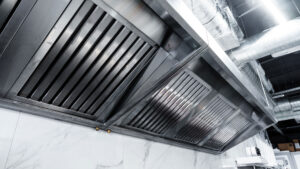
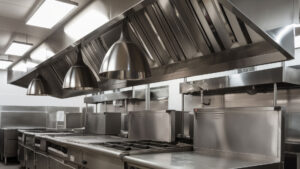
- Hood and duct system: cleaned to bare metal on a frequency matching your cooking volume; access panels are present and openable.
- Records: service reports, dated labels and tags for everything above.
Phoenix Is Now on the 2024 International Fire Code
This is the part most published guidance has not caught up with. The City of Phoenix adopted the 2024 International Fire Code, effective February 17, 2026, replacing the 2018 edition that had governed since 2019. The Phoenix Fire Department publishes an Adopted Amendment Packet alongside it, setting out the local modifications.
For most operating kitchens the day-to-day exhaust requirements did not change character. the code still points to NFPA 96 for commercial cooking ventilation, and that is still the document your cleaning is measured against. What changed is the reference edition your inspector is working from, which matters when a finding is disputed and when a plan review or a tenant improvement is in play. If you are being told about the fire code for cleaning Arizona hoods by a vendor still citing the 2018 edition in Phoenix, that vendor is six months behind.
Questions on the application go to the Phoenix Fire Department’s Fire Prevention Division at 602-262-6771.
Arizona Has No Statewide Commercial Fire Code. Your city sets it.
Arizona leaves commercial fire code adoption to municipalities. There is no single state edition that covers the Valley, which means a Phoenix kitchen and a kitchen twenty minutes away can be inspected against different editions of the same code in the same week, and a multi-unit operator can be compliant in one location and not in another on identical practices.
If you run hood cleaning in Phoenix on one schedule and hood cleaning in Gilbert on another because that is what each vendor recommended, confirm the adopted edition with each city’s fire department directly rather than assuming the Valley moves together. It does not.
Fire Inspection and Health Inspection Are Not the Same Inspection
Both look at your head. They are not the same visit, the same agency, or the same code, and they do not share records.
- Fire: the Phoenix Fire Department, under the fire code the city has adopted, pointing to NFPA 96. Concerned with fuel load, suppression and containment.
- Health: Maricopa County Environmental Services, under the county environmental health code. Concerned with contamination: grease dripping toward food, filters missing during service, ventilation that fails to remove condensate.
The practical consequence is that a clean bill from one proves nothing to the other, and each wants its own paperwork. Operators who keep a single “hood folder” tend to discover this in front of the wrong inspector. It matters for Tucson operators too, because south of the county line, the health side is Pima County, not Maricopa, on its own schedule and its own portal.
There is one more asymmetry worth knowing. Maricopa County publishes restaurant inspection results publicly and they are searchable by anyone, which means a health finding involving your ventilation is visible to guests in a way a fire finding usually is not. For an operator whose ICP is built on reputation, that is the inspection with the longer tail.
The Hood and Duct System: What Actually Gets Looked At
An inspector working the exhaust side is looking for grease-laden deposits on any surface in the system and for whether the system can be inspected at all. That means:
- Filters: baffle-type grease removal devices in place, seated, and present during cooking.
- Hood interior and plenum: the chamber behind the filters, cleaned to bare metal rather than wiped down.
- Duct run: the full path from the hood to the rooftop termination, with access panels present, unpainted, unsealed and actually openable.
- Exhaust fan: blades and housing degreased, hinge kit functional, fan base free of pooled grease.
Access panels are the finding operators least expect. NFPA 96 expects them at intervals along the duct and at changes of direction so the whole run can be reached. A duct with panels painted over or missing cannot be fully cleaned, and the report has to say so, which is a documented deficiency sitting in your file until it is fixed. The full picture of NFPA 96 requirements for hood cleaning in Phoenix covers the whole path, not the visible end of it.
What Operators Get Wrong About Frequency
NFPA 96 sets how often the system must be inspected and requires cleaning whenever that inspection finds contamination. It is not a cleaning entitlement. In the current 2024 edition the table is numbered Table 12.4, renumbered from Table 11.4, which is what most guidance still cites. Minimum inspection intervals:
- Solid fuel (wood, charcoal, mesquite): monthly
- High-volume (24-hour operations, charbroiling, wok cooking): quarterly
- Moderate-volume (most full-service lines): semiannually
- Low-volume (seasonal, institutional, light use): annually
Your fire suppression system runs on its own separate cycle: semiannual service under NFPA 17A, with certain components requiring internal examination every six years. The two schedules are independent, and one contractor rarely holds both. Operators building a genuine kitchen fire prevention program track them separately. That applies as much to hotel and institutional kitchens as it does to restaurant kitchens.
The Three Files: How Inspection-Ready Kitchens Are Actually Organized
Everything an inspector, an auditor or an adjuster can ask you for lives in one of three files. Kitchens that pass consistently keep three; kitchens that scramble keep one.
- The fire file: suppression service reports, extinguisher tags, hood cleaning reports with their dated labels and access panel tags, and the certification of whoever did the work.
- The health file: county permit, manager certification, ventilation and cleaning logs, and temperature records.
- The insurance file: the same hood cleaning records, kept for the carrier rather than the inspector, because what your insurer requires after a loss is proof of a maintained schedule, not proof of a single cleaning.
Same kitchen, three audiences, three sets of paper, and the overlap between them is exactly the hood-cleaning report. One document, filed three times, covers most of what all three will ask for. That is the whole trick, and it is why whether your cleaner is certified matters more than it looks: an uncertified provider’s report may not satisfy the authority having jurisdiction, and a report that does not satisfy the AHJ is not in the file at all.
What to Have Out Before the Inspector Walks In
Preparation is mostly retrieval. Have these on the counter rather than in a back office:
- The last hood cleaning report, with its date, the technician’s name, the provider’s certification, and the list of any areas that could not be reached.
- The suppression system service tag and report from the last six months.
- Extinguisher tags: walk the line and check the dates yourself first.
- Your menu and cooking equipment list, which is what determines the inspection interval your exhaust system is held to.
Reading the last report before the visit is worth more than any of it. If it names an unreachable section of duct, the inspector will find the same thing, and knowing it is coming turns a surprise finding into a plan you can describe.
When a Failed Inspection Is Not a Cleaning Problem
Hood cleaning is the recurring finding, not the only one. Several of the most common failures no cleaning will fix:
- Blocked or non-operable egress: the most common finding across all occupancy types and a housekeeping and building issue rather than a kitchen one.
- A suppression system past its semiannual service or not UL 300 compliant: a fire protection contractor’s scope, not a cleaner’s.
- Missing or painted-over access panels: sheet metal work that has to happen before a full cleaning is even possible.
- Grease on the roof: a containment failure calling for rooftop grease containment and often a lease and roofing warranty issue as well.
A vendor who answers every finding with a cleaning quote is not reading your report.
Frequently Asked Questions
What does a fire marshal look for in a commercial kitchen?
Suppression system service records and correct nozzle coverage, Class K extinguishers with current tags, clear egress, safe electrical and gas connections, a hood and duct system free of grease-laden deposits, and documentation for all of it.
How often are commercial kitchens fire-inspected in Phoenix?
Routine fire inspection frequency is set by the Phoenix Fire Department based on occupancy and risk, and complaint or permit-driven visits happen outside that cycle. Confirm your own schedule with the Fire Prevention Division at 602-262-6771.
Is a hood-cleaning certificate required by law?
NFPA 96 requires a dated service label on the hood, tags at each access panel opened, and a written report within two weeks identifying anything that could not be reached. The fire code Phoenix has adopted points to NFPA 96, so in practice those records are what you must produce.
What happens if my kitchen fails a fire inspection?
You are issued findings with a correction deadline and a re-inspection. Most exhaust findings are correctable inside a normal cleaning cycle. Findings that require sheet metal work or a suppression upgrade take longer, which is why they are worth catching before the visit.
Do you work with kitchens across the Phoenix metro?
Yes. Gilbert, Scottsdale, Chandler, Mesa, Phoenix, Tempe, and Tucson. Most cleanings run overnight so service is not disrupted, and every job leaves the labels, tags and written report your fire file needs.
Walk Into Your Next Inspection Already Ready
Hood Hero is local, family-owned and operated, $5M insured, and staffed by Phil Ackland-certified technicians who are background-checked and drug-screened, which matters when the work happens overnight in an empty kitchen. Every job is held to The Mom Clean Standard™: if it is not right, we come back.
If your inspection is on the calendar and your fire file is thinner than you would like, book a free compliance check. Call (602) 341-3163 or request service online, and we will walk the whole system, tell you what an inspector will find, and leave you with the documentation to prove it was handled.